
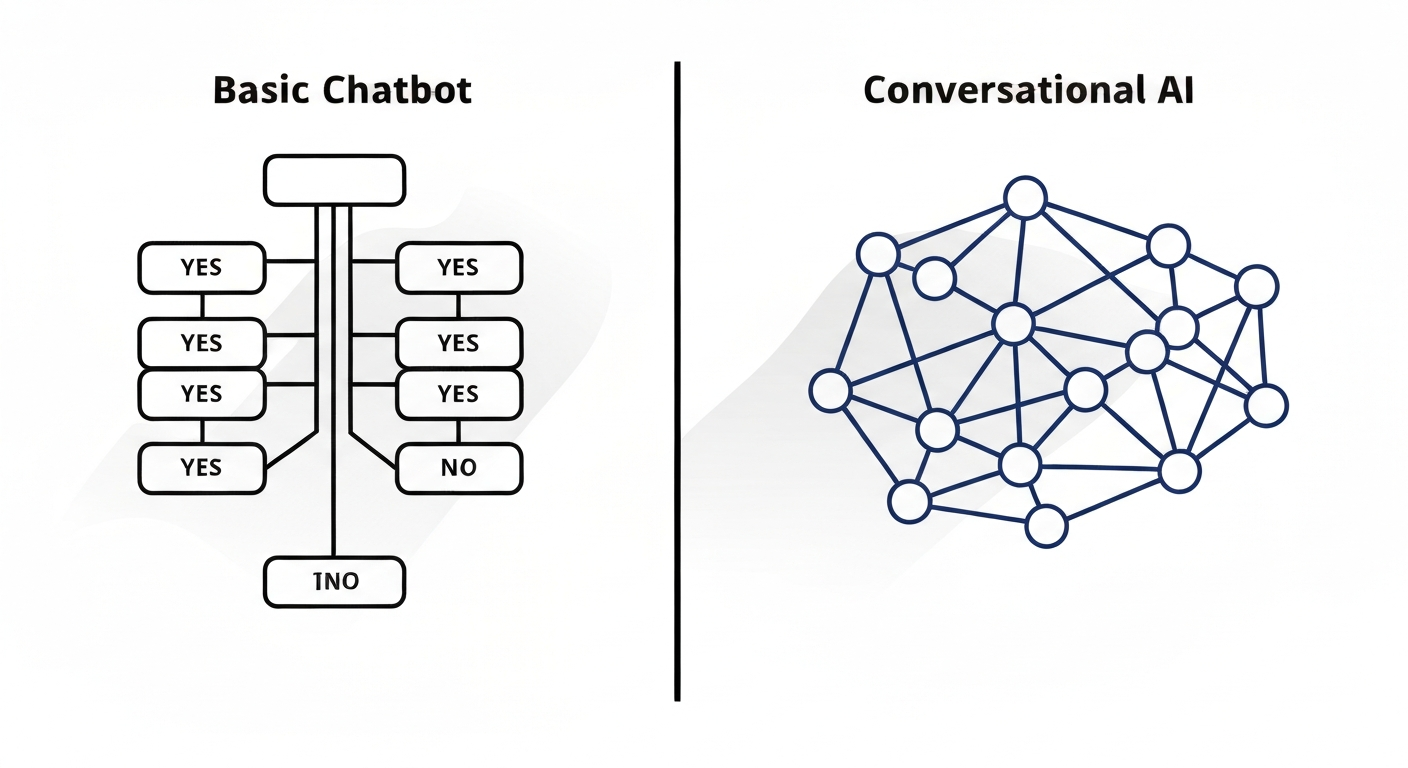
Basic Chatbots vs. Conversational AI: Understanding the Difference
The word "chatbot" gets applied to two genuinely different pieces of technology, and most business owners never realize they're being sold two entirely different things under the same label. One is a decision tree dressed up as a conversation. The other actually understands language the way a person does. Confusing the two is exactly how a business ends up disappointed after adopting "AI" that behaves nothing like what was promised.
Understanding the actual distinction matters, because it directly predicts whether the system will handle a real customer conversation or fall apart the moment someone asks something slightly unexpected.
What a Basic Chatbot Is Actually Doing Under the Hood
A basic chatbot, the kind that's existed for well over a decade, works on a fundamentally simple principle: match an input to a pre-written response. This might happen through clickable buttons presenting a limited menu of choices, or through keyword matching, where the bot scans a message for specific trigger words and returns the corresponding scripted reply.
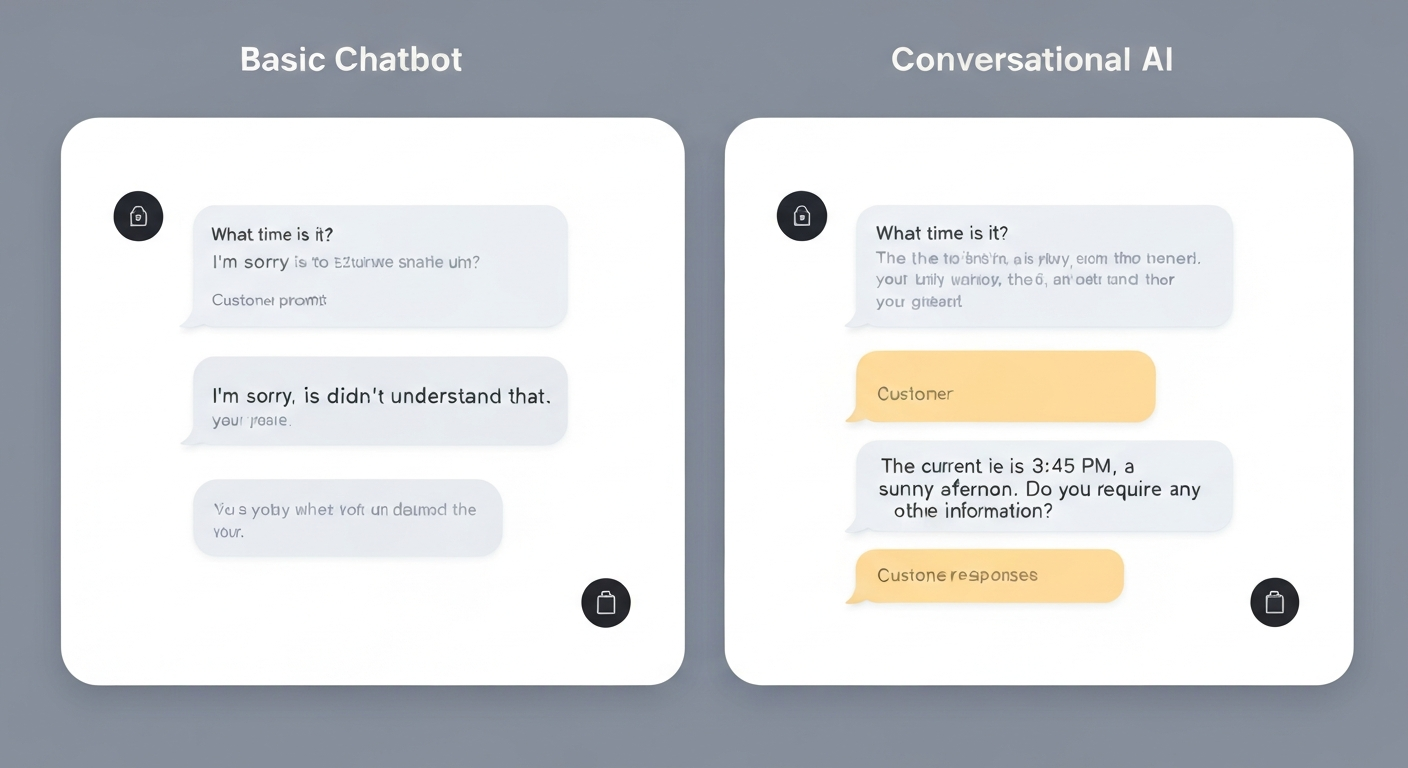
Neither approach involves any actual understanding of language. The bot isn't interpreting what a customer means, it's pattern-matching against a narrow, predetermined set of possibilities. This works fine as long as every customer interaction fits neatly into one of the anticipated categories. The moment a real person phrases a normal question in a way the bot's designers didn't specifically account for, the system has nothing useful to offer beyond a generic fallback response.
What Conversational AI Is Actually Doing Differently
Conversational AI, built on modern large language models, works on a completely different principle. Instead of matching an input to a pre-written response, it's processing the actual meaning of what's being said, understanding intent, context, and nuance the way a person listening to the conversation would.
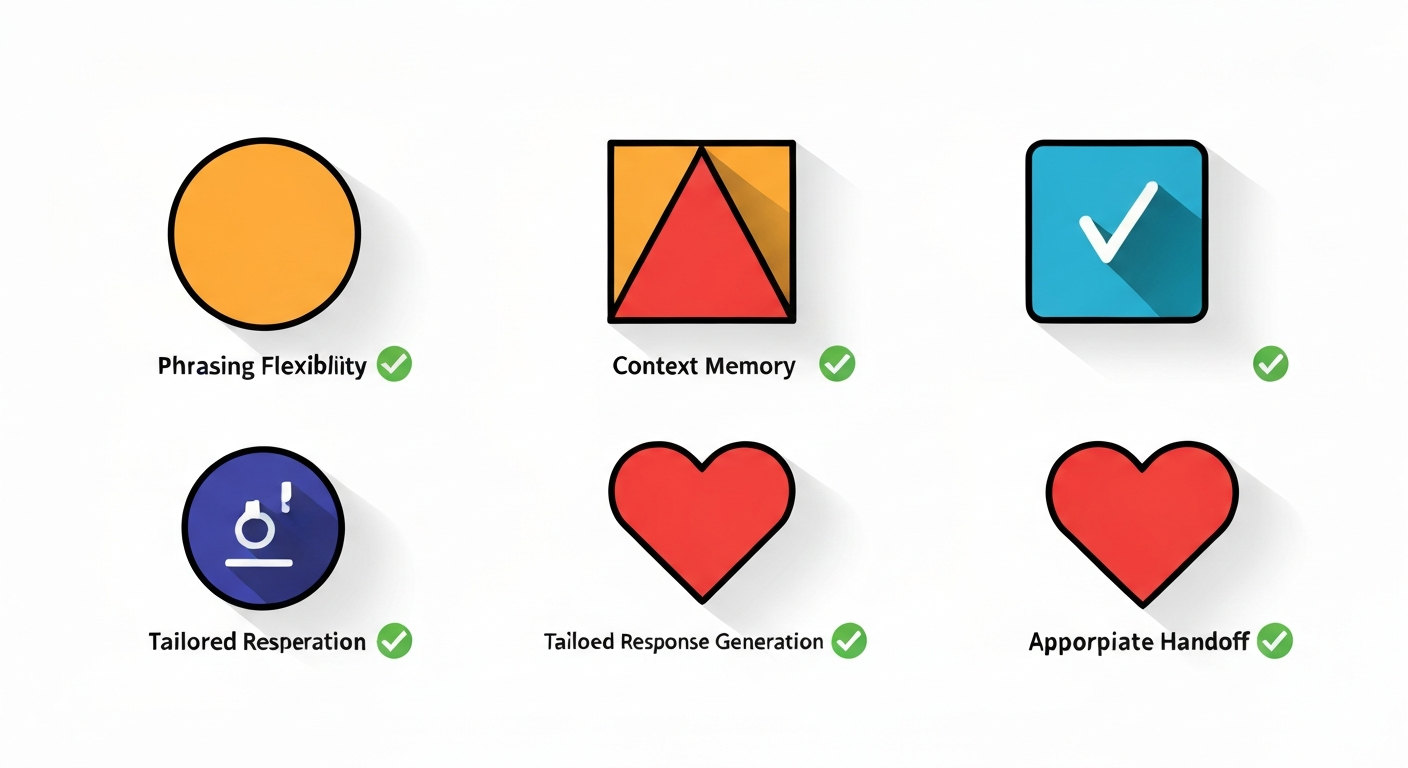
This distinction shows up clearly in a few specific capabilities:
- It can understand a question phrased in dozens of different ways without needing each specific phrasing pre-programmed in advance
- It maintains context across multiple exchanges in a conversation, rather than treating each message as a completely isolated event
- It can generate a genuinely new response tailored to the specific situation, rather than selecting from a fixed list of pre-written options
- It can recognize when a request falls outside its knowledge and hand off appropriately, rather than looping on a generic "I didn't understand" message
Hear the difference between a basic chatbot and real conversational AI for yourself.
Book a Free AI Strategy Call →Why This Distinction Gets Blurred So Often in Marketing
Part of the confusion comes from how loosely the word "chatbot" gets used across the industry. A company selling a basic, rule-based system and a company selling true conversational AI might both describe their product using nearly identical marketing language, "smart," "AI-powered," "handles customer questions automatically." The underlying technology, and the actual customer experience it produces, can be worlds apart despite similar-sounding descriptions.
This is why testing a system directly, rather than relying on marketing copy alone, tends to reveal the real difference immediately. A basic chatbot will expose its limitations within the first two or three exchanges of an unscripted conversation. Conversational AI generally won't, because it isn't relying on a script in the first place.
A Direct Comparison of How Each One Behaves in Practice
| Interaction Scenario | Basic Chatbot | Conversational AI |
|---|---|---|
| Customer Phrases a Common Question Unusually | Fails to match, returns generic fallback | Understands intent, responds correctly |
| Multi-Turn Conversation With Follow-Up Questions | Treats each message in isolation | Maintains context across the full exchange |
| Question Outside Its Scope | Loops or gives an unrelated answer | Recognizes the gap, escalates appropriately |
| Setup and Maintenance Over Time | Requires manually mapping new scripted paths | Learns from real conversations and improves |
Why This Matters More as Customer Expectations Rise
A decade ago, customers were somewhat forgiving of clunky, obviously scripted bots, since the alternative was often no immediate response at all. That tolerance has largely disappeared. A customer today who hits a basic chatbot's limitations tends to disengage immediately, often assuming, not incorrectly, that the business simply isn't equipped to help them right now.
This makes the distinction between basic chatbots and true conversational AI a genuine business risk, not just a technical detail. A business investing in the wrong category of technology, expecting it to behave like the other, is likely to see disappointing results and may incorrectly conclude that "AI doesn't work for this," when the actual issue was the specific system chosen, not the broader category of technology.
How This Distinction Applies Across Voice, Text, and Chat
This same underlying difference applies regardless of the channel. A Voice AI Receptionist built on true conversational AI understands a caller's actual request the same way a properly built web chat agent does, while a basic, rule-based phone menu system suffers from the exact same rigid limitations as a basic web chatbot, just delivered through a different medium.
This consistency matters because a business shouldn't have to evaluate voice, text, and chat as entirely separate technology categories. The same underlying distinction, pattern-matching versus genuine language understanding, determines whether any of these channels will actually hold up in a real customer interaction.
Building on the Right Foundation From the Start
Every AI system BayksCloud builds, whether it's a Voice AI Receptionist, a Conversation AI text agent, or a web chat agent, runs on true conversational AI rather than a rule-based decision tree, connected natively inside GoHighLevel and trained specifically on your business.
The typical process looks like this:
- A discovery call reviewing your services, common customer questions, and how conversations typically unfold in your business
- Training the underlying conversational AI on your specific business rather than a generic script
- A review period testing realistic, unscripted questions to confirm it holds up the way a basic chatbot wouldn't
- Launch within 72 hours once all requirements are gathered

If you want to test this distinction directly against your own questions, you can start a 14-Day Free Trial and see exactly how it handles an unscripted conversation.
Start 14-Day Free TrialBiggest Takeaways
- Basic chatbots match inputs to pre-written responses using button menus or keyword triggers, with no actual understanding of language
- Conversational AI processes the real meaning behind a request, understanding intent and maintaining context across a full exchange
- Marketing language often blurs the distinction between the two, making a direct test of the system more reliable than reading a product description
- The wrong category of technology can lead a business to wrongly conclude that AI itself doesn't work, when the actual issue was the specific system chosen
- The same distinction applies across voice, text, and chat, since the underlying technology, not the channel, determines whether a system holds up in real conversations
Make sure you're building on real conversational AI, not a decision tree in disguise.
Book Your Free AI Strategy Call Today →Key Takeaways
- AI automation directly impacts your bottom line by capturing leads and booking appointments that would otherwise go to competitors.
- Implementing AI doesn't replace your staff; it frees them from repetitive tasks so they can focus on high-value customer interactions.
- Speed to lead is critical in local services. AI ensures a 24/7 instant response across voice, web chat, and SMS.

Written by Eric Adjei
Eric Adjei is an AI & Digital Marketing Strategist and Business Coach with over 20 years in the IT and digital marketing space, and founder of BayksCloud Consultants LLC - a digital marketing agency in the Miami–Fort Lauderdale metro area, South Florida. He specializes in helping Managed IT Services (MSPs), Medical Spas (Medspas), and HVAC companies replace manual operations and missed leads with AI employees, intelligent CRM systems, and digital marketing strategies that work around the clock.
Book a Free AI Strategy Call →Voice AI
Every missed call is a customer you might never get back.
Most people don't leave voicemails. They hang up and call someone else.
- Answers inbound calls for you, even after hours
- Qualifies leads, handles FAQs and books appointments automatically
- Sounds natural and captures every opportunity in your CRM
Related Articles
Why Small Businesses Fail to Follow Up (And Why It's Never About Effort)
Poor follow-up isn't a discipline problem. Here's the real structural reason leads and customers slip through the cracks, and how to fix it.
Missed Call Lost Revenue: The Silent Leak Draining Your Business Every Month
Every missed call is a customer calling a competitor. See the real cost of missed call lost revenue and how AI recovers it automatically, 24/7.
AI Receptionist for Small Business: The Employee Who Never Misses a Call
Discover how an AI receptionist for small business answers every call 24/7, books appointments, and saves you thousands vs. hiring staff. Book a free demo today.
Ready to implement AI in your business?
Book a free strategy call to see how an AI receptionist can stop your revenue leaks.
Book Free AI Strategy Call