
The Blueprint for Automating Google Review Requests with AI
Most businesses have plenty of happy customers and painfully few Google reviews to show for it. This isn't because customers weren't satisfied, it's because almost nobody voluntarily stops what they're doing after a good experience to go write a review unprompted. Someone has to actually ask, at the right moment, in the right way, or it simply doesn't happen.
That "someone" is where most businesses quietly drop the ball, not out of laziness, but because manually remembering to ask every single customer, at the right time, every time, is a task that competes with everything else happening in a busy day.
Why Good Service Alone Doesn't Generate Reviews
There's a common assumption that if a business simply provides great service, reviews will follow naturally. In practice, this rarely holds up. A satisfied customer typically goes about their day without a second thought about leaving public feedback, not because they didn't appreciate the experience, but because writing a review requires them to take initiative nobody actually asked for.
The businesses that consistently accumulate strong review counts aren't necessarily providing dramatically better service than their competitors. They're simply asking, consistently, at the moment satisfaction is highest, rather than hoping customers remember to do it on their own days or weeks later.
The Blueprint: Timing Is the Entire Mechanism
The core insight behind an effective review request system is remarkably simple: timing determines almost everything. Ask too early, before the service is actually complete, and the request feels premature. Ask too late, days after the experience has faded from memory, and the request feels like an afterthought easy to ignore.
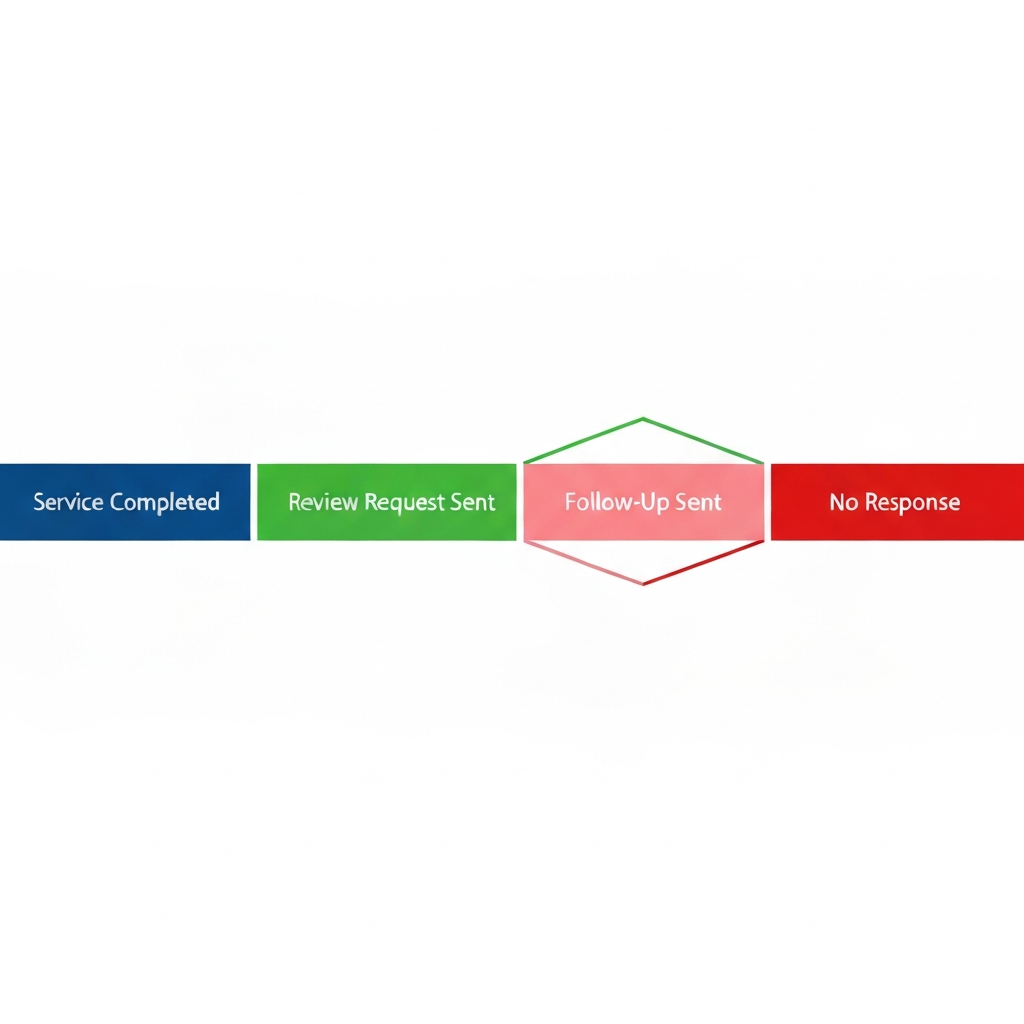
Here's what a properly built review request sequence actually looks like:
- The moment a service or appointment is marked complete in the CRM, a short window begins where satisfaction is at its peak
- A review request goes out automatically through Conversation AI, typically via text message, since text tends to get opened and acted on faster than email
- The message is brief, personal-sounding, and includes a direct link to leave a review, removing any friction between the thought "sure, I'll do that" and actually doing it
- If there's no response within a reasonable window, a single, polite follow-up goes out, without becoming repetitive or pushy
See what an automated review request sequence would look like for your business.
Book a Free AI Strategy Call →Why This Needs to Be Selective, Not Sent to Absolutely Everyone
A properly built system doesn't necessarily treat every single customer interaction identically. Some businesses choose to route review requests only to customers who indicated a positive experience, while customers who expressed a complaint or concern get directed toward internal resolution instead of a public review request.
This matters because sending a review request immediately after an unresolved complaint doesn't just fail to generate a good review, it risks generating a bad one at exactly the moment a business would prefer to fix the issue privately first. A properly designed sequence accounts for this distinction rather than blasting the same request to every customer regardless of how their experience actually went.
What Happens After the Review Gets Left
Requesting the review is only half the system. Once a review comes in, whether it's glowing or critical, a response matters almost as much as the review itself, both to the customer who left it and to every future customer who reads it before deciding whether to call.
A well-built system can draft or send timely responses in the business's actual voice, thanking a positive reviewer by name and referencing specifics from their comment, or acknowledging a critical review professionally and inviting the customer to resolve the issue directly, rather than leaving reviews sitting unanswered for weeks, which itself sends a quiet signal to anyone reading them later.
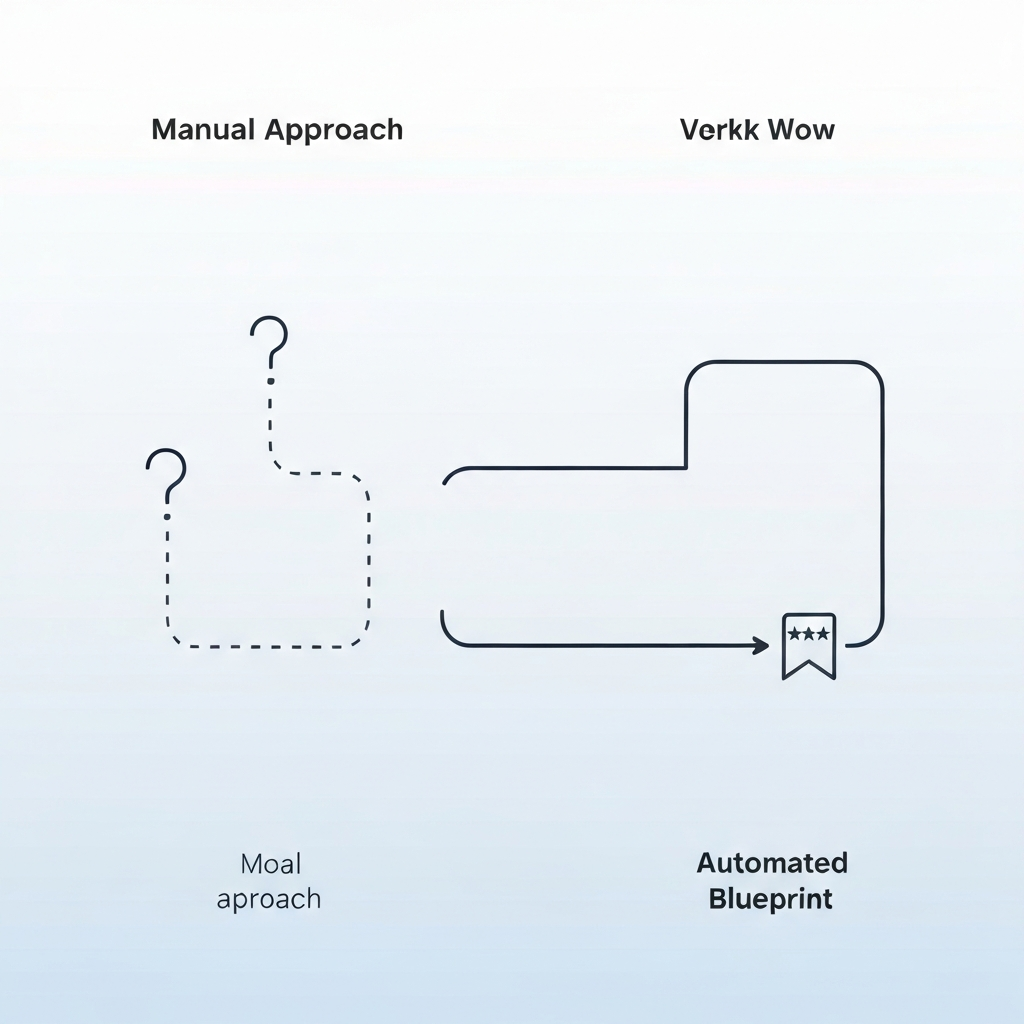
Comparing a Manual Approach Against an Automated Blueprint
| Stage of the Process | Manual, Ad-Hoc Approach | Automated AI Blueprint |
|---|---|---|
| Timing of the Request | Inconsistent, often forgotten entirely | Triggered automatically at peak satisfaction |
| Which Customers Get Asked | Random, depends on staff remembering | Routed based on experience, positive vs. concern |
| Follow-Up if No Response | Rarely happens | One polite, automatic follow-up |
| Responding to Reviews | Often delayed or skipped | Timely, consistent, in brand voice |
Why This Compounds Over Time
A single extra review here or there doesn't move the needle much on its own. What actually shifts a business's online reputation is the compounding effect of consistent, well-timed requests running every single week without depending on any one staff member remembering to send them. Review count and review recency both factor into how prospective customers, and search platforms themselves, perceive a business's credibility.
This is where Workflow Automation ties directly back into revenue, since a stronger, more current review profile tends to improve trust with new prospects browsing a business for the first time, closing the loop between operational consistency and actual new customer acquisition.
Building This System Without Adding to Your Team's Workload
None of this requires a staff member remembering to manually text every customer after every appointment. Every review request sequence BayksCloud builds runs natively inside GoHighLevel, triggered directly by the same CRM record that already tracks when a service or appointment was completed.
The typical process looks like this:
- A discovery call reviewing how your business currently requests reviews, if at all, and what timing makes sense for your services
- Building the automated sequence, including how positive versus concerning experiences get routed differently
- A review period confirming the tone and timing feel natural rather than robotic or pushy
- Launch within 72 hours once all requirements are gathered

If you want to see this sequence running against your own customer base before committing, you can start a 14-Day Free Trial and track the results directly.
Start Your 14-Day Free Trial →Biggest Takeaways
- Good service alone rarely generates reviews, since most satisfied customers simply don't think to leave one without being asked
- Timing is the core mechanism behind an effective review request, asking at the moment satisfaction peaks matters more than the wording itself
- Review requests should be routed selectively, sending them to satisfied customers while directing concerns toward private resolution first
- Responding to reviews consistently matters almost as much as generating them, since unanswered reviews send their own signal to future customers
- The value of this system compounds over time through consistent, automatic requests running every week without relying on staff memory
Turn your happiest customers into your strongest marketing asset, automatically.
Book Your Free AI Strategy Call Today →Key Takeaways
- AI automation directly impacts your bottom line by capturing leads and booking appointments that would otherwise go to competitors.
- Implementing AI doesn't replace your staff; it frees them from repetitive tasks so they can focus on high-value customer interactions.
- Speed to lead is critical in local services. AI ensures a 24/7 instant response across voice, web chat, and SMS.

Written by Eric Adjei
Eric Adjei is an AI & Digital Marketing Strategist and Business Coach with over 20 years in the IT and digital marketing space, and founder of BayksCloud Consultants LLC - a digital marketing agency in the Miami–Fort Lauderdale metro area, South Florida. He specializes in helping Managed IT Services (MSPs), Medical Spas (Medspas), and HVAC companies replace manual operations and missed leads with AI employees, intelligent CRM systems, and digital marketing strategies that work around the clock.
Book a Free AI Strategy Call →Voice AI
Every missed call is a customer you might never get back.
Most people don't leave voicemails. They hang up and call someone else.
- Answers inbound calls for you, even after hours
- Qualifies leads, handles FAQs and books appointments automatically
- Sounds natural and captures every opportunity in your CRM
Related Articles
Why Small Businesses Fail to Follow Up (And Why It's Never About Effort)
Poor follow-up isn't a discipline problem. Here's the real structural reason leads and customers slip through the cracks, and how to fix it.
Missed Call Lost Revenue: The Silent Leak Draining Your Business Every Month
Every missed call is a customer calling a competitor. See the real cost of missed call lost revenue and how AI recovers it automatically, 24/7.
AI Receptionist for Small Business: The Employee Who Never Misses a Call
Discover how an AI receptionist for small business answers every call 24/7, books appointments, and saves you thousands vs. hiring staff. Book a free demo today.
Ready to implement AI in your business?
Book a free strategy call to see how an AI receptionist can stop your revenue leaks.
Book Free AI Strategy Call