

How AI Handles Angry Callers and De-escalation
There's a specific kind of call every business dreads. Someone's upset, maybe about a billing issue, a delayed service, or a miscommunication, and they're calling with their frustration already at full volume before anyone even says hello. It's the moment most business owners assume AI simply can't handle, that this is where a human voice has to take over.
The reality is more nuanced than that assumption suggests. A poorly built AI voice system genuinely struggles here. A properly built one, with the right training and clear escalation rules, often handles the first moments of a heated call more consistently than an overworked human team member running on their fifth frustrating call of the day.

Why This Scenario Gets Treated as the Exception That Proves AI Doesn't Work
Skeptics of AI voice technology tend to reach for this exact scenario first. "Sure, it can book a simple appointment, but what happens when someone's genuinely upset?" It's a fair question, and it deserves a fair answer rather than a dismissive one.
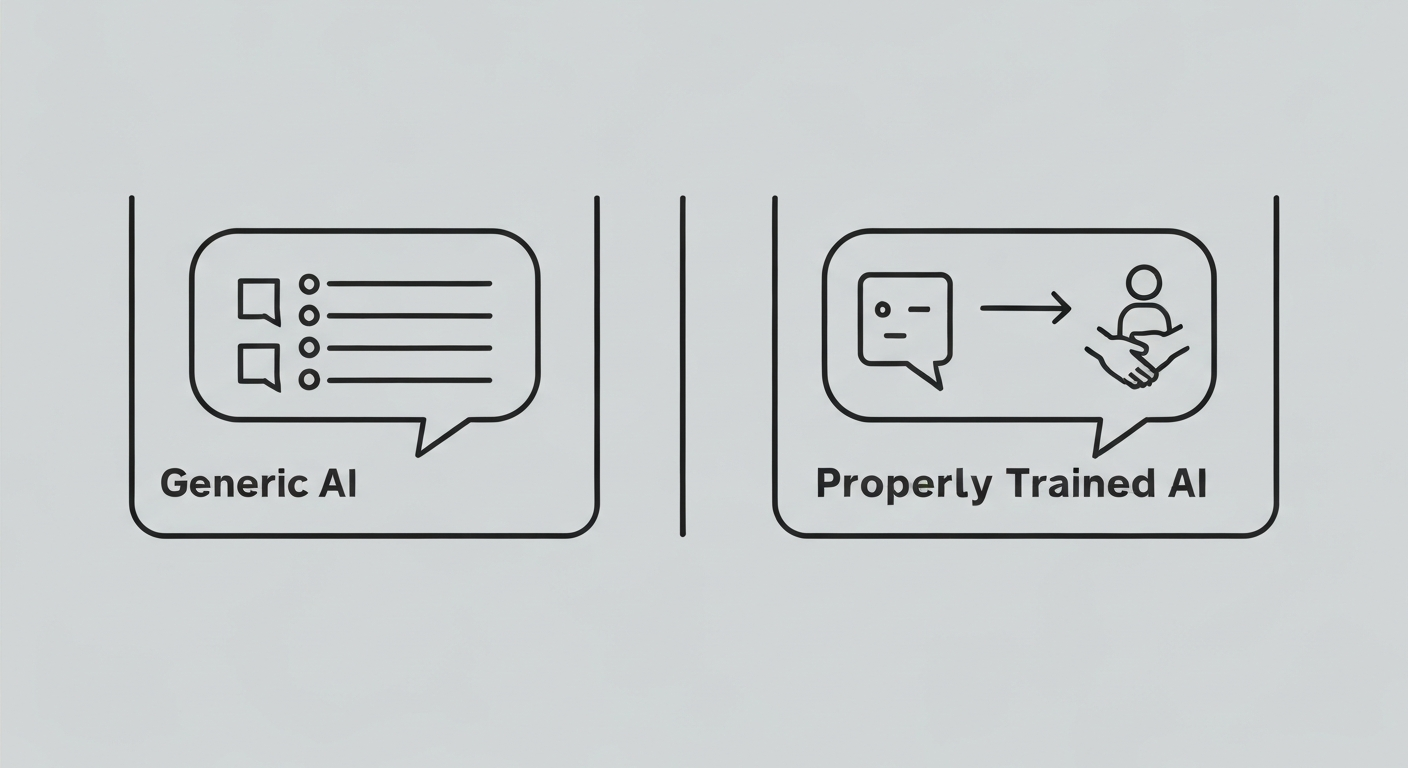
The honest answer is that a generic, thinly trained AI system often does struggle here, because it wasn't built with any specific guidance for emotional escalation. It might respond with the same flat, scripted tone regardless of whether the caller is calm or furious, which can make an already frustrated person feel even less heard. This is a real limitation, but it's a limitation of poor training, not an inherent flaw in the technology itself.
What Changes When De-escalation Is Actually Built Into the System
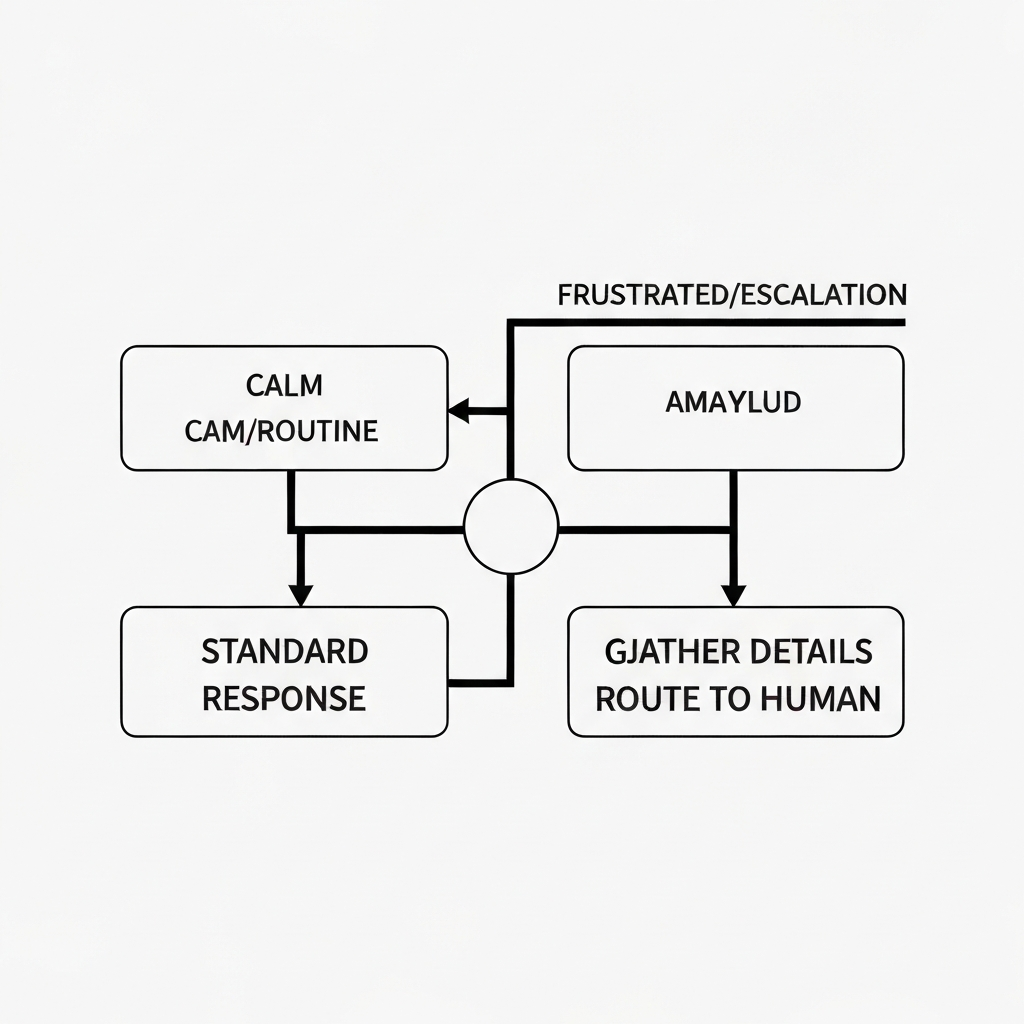
A properly trained Voice AI Receptionist is built with specific instructions for recognizing tone and frustration, not just the words being said. When a caller's tone shifts, faster speech, raised volume, repeated frustration, the AI is trained to respond differently than it would to a routine question.
Here's what that typically looks like in practice:
- The AI acknowledges the frustration directly and calmly, rather than launching straight into a scripted response as if nothing was wrong
- It avoids arguing or over-explaining, sticking to short, clear statements rather than a wall of text that can feel dismissive to someone already upset
- It recognizes specific trigger phrases, like a request for a refund, a complaint about being overcharged, or repeated requests to speak with a manager, and treats these as immediate escalation signals
- It never attempts to talk someone out of their frustration or convince them they're wrong, since that's not a productive use of the moment
See how a properly trained AI actually handles a heated call scenario.
Book a Free AI Strategy Call →The Escalation Decision Isn't Optional, It's the Whole Point
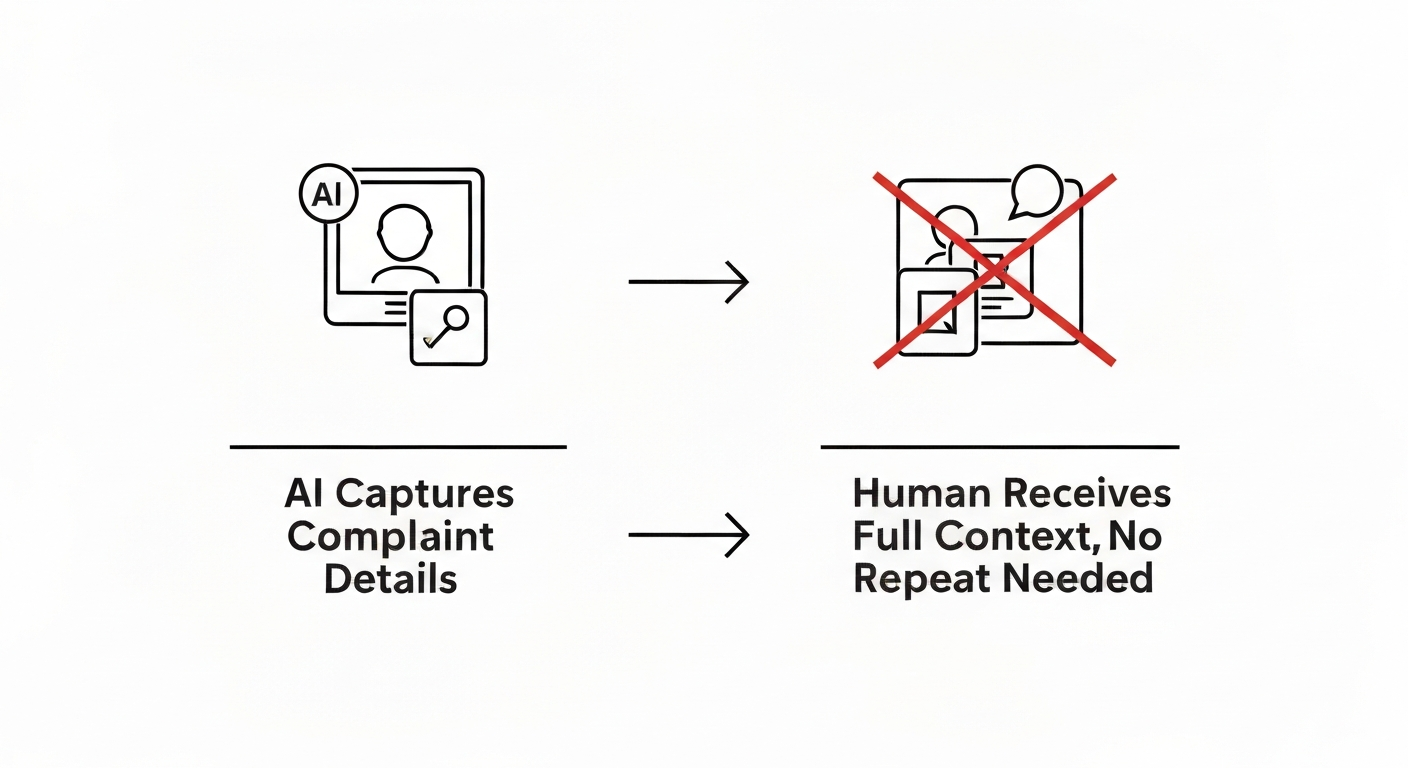
The most important design principle in this entire scenario isn't teaching an AI to "handle" anger. It's teaching it to recognize the moment where handling it further isn't appropriate, and to hand the caller off to a real person immediately, with full context already gathered so the customer doesn't have to repeat their entire complaint from scratch.
This escalation isn't a failure state. It's the system working exactly as intended. A frustrated customer being routed quickly and smoothly to a human, with the AI having already captured the basic details of the issue, is a far better experience than that same customer sitting on hold for ten minutes waiting for anyone to pick up in the first place.
Comparing an Untrained Response Against a Properly Built One
| Moment in the Call | Untrained or Generic AI Response | Properly Trained AI Response |
|---|---|---|
| Caller Raises Their Voice | Continues with the same scripted tone | Acknowledges frustration, shifts tone accordingly |
| Caller Demands a Refund | Attempts to explain policy at length | Recognizes trigger, gathers key details, escalates |
| Caller Repeats Themselves in Frustration | Repeats the same generic response again | Confirms understanding before moving forward |
| Caller Asks for a Human | Continues trying to resolve it independently | Immediately routes to a human with context included |
Why the Handoff Itself Matters as Much as the Initial Response
A frustrated customer who gets escalated to a human still expects that human to already understand what's going on. One of the most damaging experiences for an upset caller is being forced to repeat their entire complaint a second time after finally reaching a person. This is where Workflow Automation plays a critical role behind the scenes, since the AI's captured notes, the nature of the complaint, and any relevant account details get passed directly to the team member picking up the call, rather than starting the conversation from zero.
This single detail, avoiding the need to repeat the complaint, often does more to de-escalate a situation than anything said during the initial AI interaction.
Building Escalation Rules That Actually Reflect Your Business
Every business has a different threshold for what counts as an escalation trigger, and a different internal process for who should handle it once it happens. This is exactly why generic, off-the-shelf AI scripts struggle here, they don't know your specific refund policy, your specific chain of command, or which situations your team genuinely wants routed to them immediately versus handled with a standard response.
At BayksCloud Consultants, every Voice AI Receptionist we build includes a dedicated escalation mapping process as part of onboarding, all running natively inside GoHighLevel. The typical process looks like this:
- A discovery call specifically covering which situations should always escalate immediately, based on your actual policies and team structure
- Training the AI to recognize both explicit requests and tonal signals of frustration, not just keyword triggers
- A review period testing realistic heated-call scenarios before anything goes live
- Launch within 72 hours once all requirements are gathered
If you want to hear how a properly built system handles this specific scenario before committing, you can start a 14-Day Free Trial and test it directly.
Biggest Takeaways
- A poorly trained AI genuinely struggles with frustrated callers, but this reflects thin training, not a fundamental limitation of the technology
- Properly built systems are trained to recognize tone and specific trigger phrases, not just the literal words in a request
- The goal isn't for AI to fully resolve every heated situation, it's to recognize the right moment to escalate to a human immediately
- A smooth handoff with context already captured prevents the frustrating experience of repeating a complaint from scratch
- Escalation rules need to reflect your business's actual policies and team structure, which is why generic scripts tend to fail in this specific scenario
Make sure your toughest calls get handled the right way, every time.
Book Your Free AI Strategy Call Today →Key Takeaways
- AI automation directly impacts your bottom line by capturing leads and booking appointments that would otherwise go to competitors.
- Implementing AI doesn't replace your staff; it frees them from repetitive tasks so they can focus on high-value customer interactions.
- Speed to lead is critical in local services. AI ensures a 24/7 instant response across voice, web chat, and SMS.

Written by Eric Adjei
Eric Adjei is an AI & Digital Marketing Strategist and Business Coach with over 20 years in the IT and digital marketing space, and founder of BayksCloud Consultants LLC - a digital marketing agency in the Miami–Fort Lauderdale metro area, South Florida. He specializes in helping Managed IT Services (MSPs), Medical Spas (Medspas), and HVAC companies replace manual operations and missed leads with AI employees, intelligent CRM systems, and digital marketing strategies that work around the clock.
Book a Free AI Strategy Call →Voice AI
Every missed call is a customer you might never get back.
Most people don't leave voicemails. They hang up and call someone else.
- Answers inbound calls for you, even after hours
- Qualifies leads, handles FAQs and books appointments automatically
- Sounds natural and captures every opportunity in your CRM
Related Articles
Why Small Businesses Fail to Follow Up (And Why It's Never About Effort)
Poor follow-up isn't a discipline problem. Here's the real structural reason leads and customers slip through the cracks, and how to fix it.
Missed Call Lost Revenue: The Silent Leak Draining Your Business Every Month
Every missed call is a customer calling a competitor. See the real cost of missed call lost revenue and how AI recovers it automatically, 24/7.
AI Receptionist for Small Business: The Employee Who Never Misses a Call
Discover how an AI receptionist for small business answers every call 24/7, books appointments, and saves you thousands vs. hiring staff. Book a free demo today.
Ready to implement AI in your business?
Book a free strategy call to see how an AI receptionist can stop your revenue leaks.
Book Free AI Strategy Call