
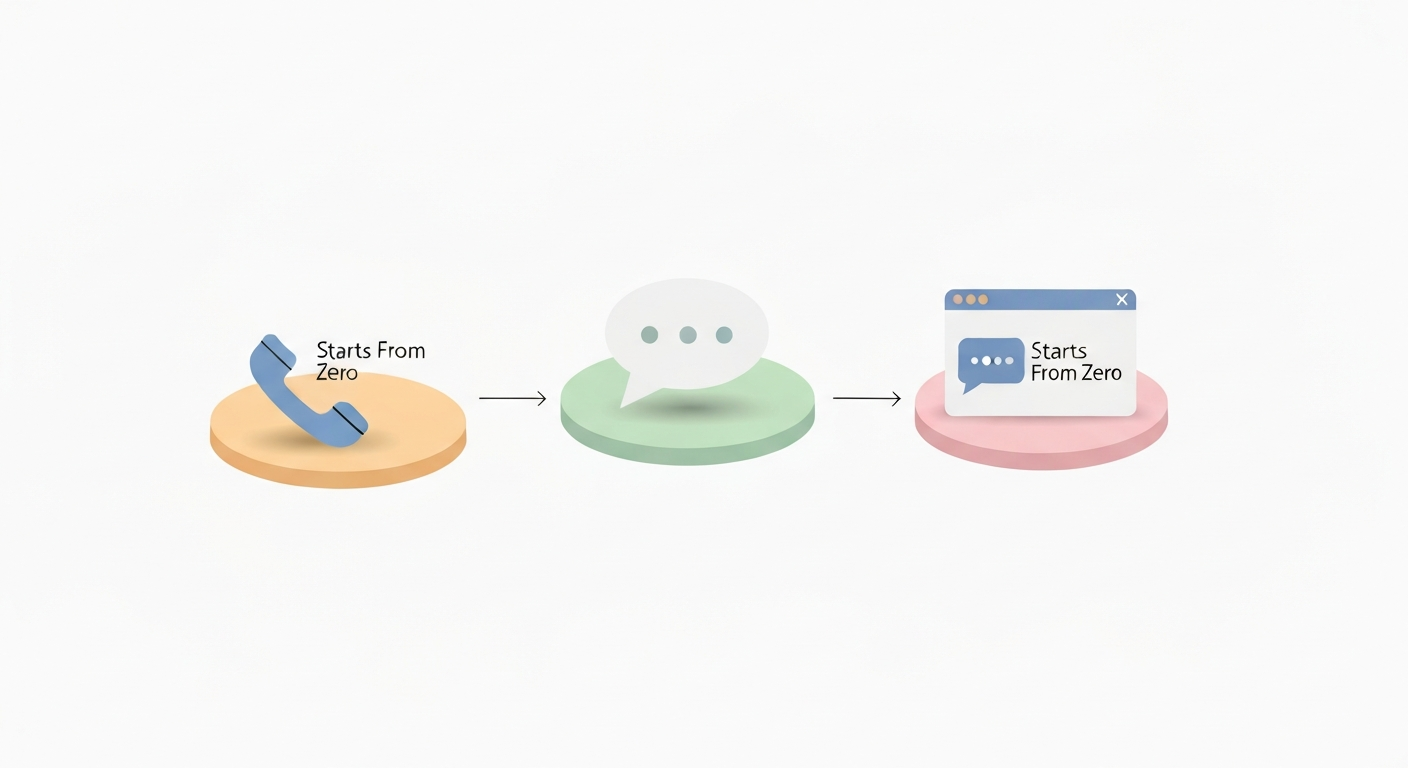
The Power of Omnichannel AI: Voice, SMS, and Web Chat Working Together
A customer calls your business, gets a quick answer, and hangs up planning to think it over. Twenty minutes later, they visit your website and start typing into the chat widget instead, curious about a follow-up question. If that chat widget has no idea the phone call ever happened, the customer is forced to explain themselves from scratch, again, to a system that should already know who they are.
This is the quiet failure point of most AI implementations. Individually capable tools that have no memory of each other, treating every new channel like a first contact, even when it's the same customer picking up a conversation they already started somewhere else.
Why Channels Usually Don't Talk to Each Other
Most businesses adopt communication tools one at a time, a chatbot gets added to the website, a separate texting tool gets set up for reminders, a phone system handles calls. Each addition solves an immediate problem in isolation, and nobody necessarily plans for how these pieces should relate to each other later.
The result is a business that technically has coverage across voice, text, and chat, but treats each one as its own disconnected universe. A customer's phone call doesn't inform what the chat widget already knows. A text conversation doesn't carry forward if that same customer later calls in. Every channel switch effectively resets the relationship back to zero, regardless of how much context already existed a few minutes earlier.
What Customers Actually Expect, Even If They Never Say It Out Loud
Customers rarely think in terms of "channels" at all. They think in terms of a single ongoing relationship with a business. When they call, then text, then browse the website, they experience that as one continuous interaction from their side, even if three completely different systems technically handled each piece.
The frustration of having to repeat information across channels isn't usually voiced as a formal complaint. It shows up quietly, as mild annoyance, as a slightly colder impression of the business, or as a customer who simply doesn't bother finishing the second or third interaction because it felt like starting over. This is friction that a business can eliminate entirely, and most customers would never think to ask for it directly, because they simply expect a business to already remember what was just discussed.
See what a truly connected voice, text, and chat experience looks like for your business.
Book a Free AI Strategy Call →What Actually Changes When Every Channel Shares the Same Memory
An omnichannel setup, where Voice AI, Conversation AI text, and web chat all read from and write to the same customer record, behaves fundamentally differently than a collection of separate tools. The specific channel a customer chooses becomes a matter of convenience for them, not a reset button on the conversation itself.
Here's what that actually looks like in practice:
- A customer calls with an initial question, and the AI logs the details of that conversation directly into the CRM
- That same customer later opens the website chat widget, and the AI immediately has context on what was discussed during the earlier call, without the customer repeating anything
- If the customer prefers to switch to text mid-conversation, the same context carries forward there as well, rather than starting a new, disconnected thread
- A team member reviewing the account later sees one unified history, not three disconnected logs across different systems that have to be manually pieced together
The specific channel becomes irrelevant to the quality of the experience. What matters is that the underlying conversation stays intact regardless of how the customer chooses to reach out at any given moment.
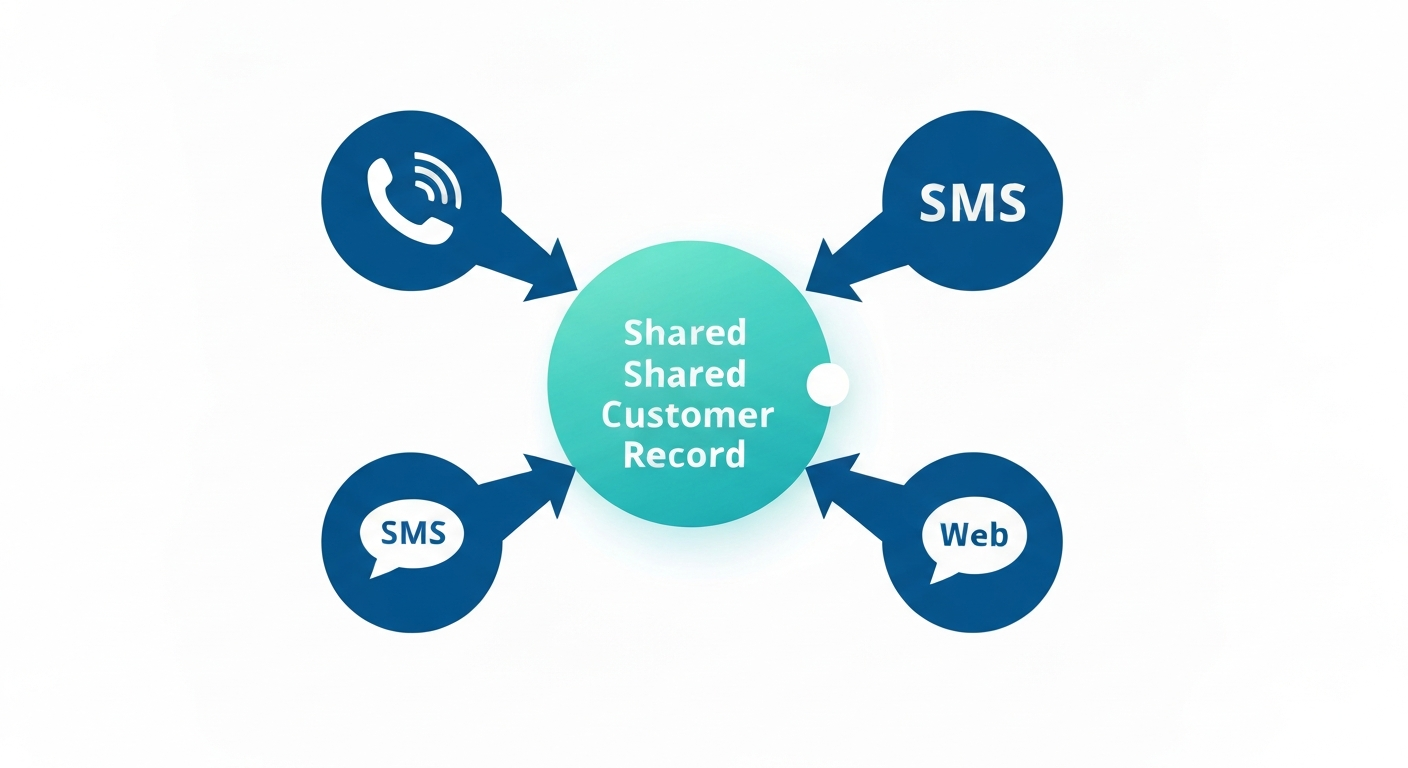
Comparing Disconnected Channels Against a True Omnichannel Setup
| Scenario | Disconnected Channels | Connected Omnichannel AI |
|---|---|---|
| Customer Calls, Then Later Texts | Starts over, no memory of the call | Continues seamlessly, full context retained |
| Customer Switches From Chat to Phone | Repeats details already provided | AI or human already has the full picture |
| Team Reviewing Customer History | Must check multiple separate systems | One unified record across all channels |
| Customer's Preferred Channel | Limited by which one "remembers" them | Any channel works equally well |
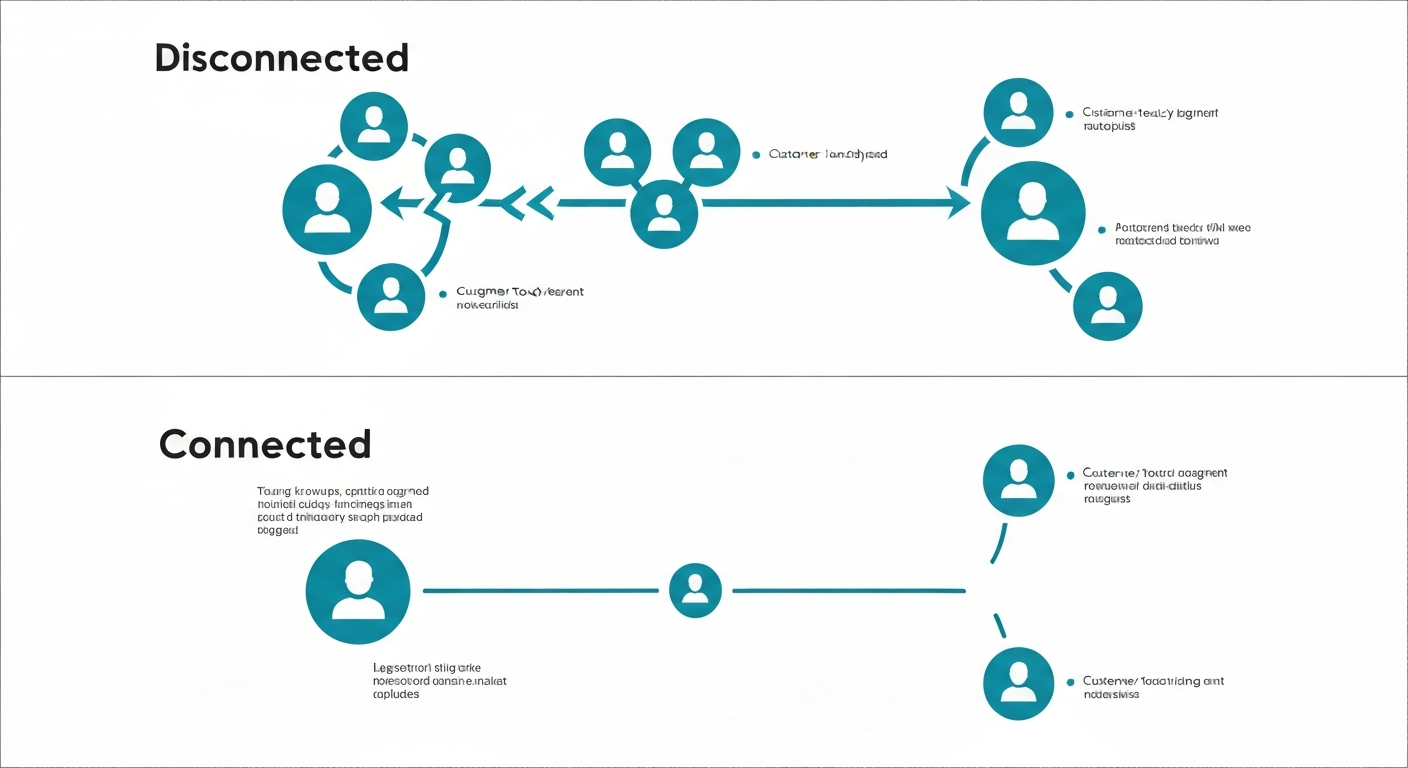
Why This Matters More as a Business Uses More Channels, Not Less
It might seem like adding more communication channels naturally creates more complexity, and in a disconnected setup, that's exactly what happens. Every new channel added without integration becomes another place a conversation can quietly reset to zero. But in a properly connected system, adding more channels actually increases convenience for the customer without adding fragmentation, since every new channel simply becomes another door into the same ongoing conversation.
This is where Workflow Automation does the quiet structural work that makes omnichannel actually functional rather than just a marketing term. It's the layer ensuring that an action taken in one channel, a call answered, a text sent, a chat message received, updates the same underlying record the other channels also read from, rather than each tool maintaining its own isolated version of events.
Building an Omnichannel System That Actually Behaves Like One
None of this requires managing three separate platforms and hoping they stay in sync. Every Voice AI Receptionist, Conversation AI text agent, and web chat system BayksCloud builds runs on the same underlying GoHighLevel CRM, which means true omnichannel behavior is the default, not something bolted on afterward.
The typical process looks like this:
- A discovery call mapping out which channels your customers actually use to reach you, phone, text, web chat, or a combination
- Building each channel to read from and write to the same shared customer record from the start
- A review period testing realistic scenarios where a customer switches channels mid-conversation
- Launch within 72 hours once all requirements are gathered

If you want to test how this feels across multiple channels before committing, you can start a 14-Day Free Trial and try switching between them yourself.
Biggest Takeaways
- ✓Businesses often add communication channels one at a time, resulting in tools that work individually but don't share any memory of each other
- ✓Customers experience their interactions with a business as one continuous relationship, regardless of how many different systems technically handled each piece
- ✓A true omnichannel setup means the specific channel a customer chooses becomes a matter of convenience, not a reset point in the conversation
- ✓Adding more channels in a disconnected setup increases fragmentation, while adding channels in a connected system increases convenience without added complexity
- ✓Workflow automation is the structural layer that keeps every channel updating the same shared customer record in real time
Give your customers one seamless conversation, no matter how they reach out.
Book Your Free AI Strategy Call Today →Key Takeaways
- AI automation directly impacts your bottom line by capturing leads and booking appointments that would otherwise go to competitors.
- Implementing AI doesn't replace your staff; it frees them from repetitive tasks so they can focus on high-value customer interactions.
- Speed to lead is critical in local services. AI ensures a 24/7 instant response across voice, web chat, and SMS.

Written by Eric Adjei
Eric Adjei is an AI & Digital Marketing Strategist and Business Coach with over 20 years in the IT and digital marketing space, and founder of BayksCloud Consultants LLC - a digital marketing agency in the Miami–Fort Lauderdale metro area, South Florida. He specializes in helping Managed IT Services (MSPs), Medical Spas (Medspas), and HVAC companies replace manual operations and missed leads with AI employees, intelligent CRM systems, and digital marketing strategies that work around the clock.
Book a Free AI Strategy Call →Voice AI
Every missed call is a customer you might never get back.
Most people don't leave voicemails. They hang up and call someone else.
- Answers inbound calls for you, even after hours
- Qualifies leads, handles FAQs and books appointments automatically
- Sounds natural and captures every opportunity in your CRM
Related Articles
Why Small Businesses Fail to Follow Up (And Why It's Never About Effort)
Poor follow-up isn't a discipline problem. Here's the real structural reason leads and customers slip through the cracks, and how to fix it.
Missed Call Lost Revenue: The Silent Leak Draining Your Business Every Month
Every missed call is a customer calling a competitor. See the real cost of missed call lost revenue and how AI recovers it automatically, 24/7.
AI Receptionist for Small Business: The Employee Who Never Misses a Call
Discover how an AI receptionist for small business answers every call 24/7, books appointments, and saves you thousands vs. hiring staff. Book a free demo today.
Ready to implement AI in your business?
Book a free strategy call to see how an AI receptionist can stop your revenue leaks.
Book Free AI Strategy Call