

The Tech Stack of the Future: Integrating AI Agents with Your Existing CRM
There's a specific kind of hesitation that shows up whenever AI comes up in a conversation with a business owner who already has a CRM they rely on. It usually sounds something like, "That sounds great, but I don't want to rip out everything we've already built just to add this." That hesitation is reasonable, and it's also based on an assumption that no longer holds up.
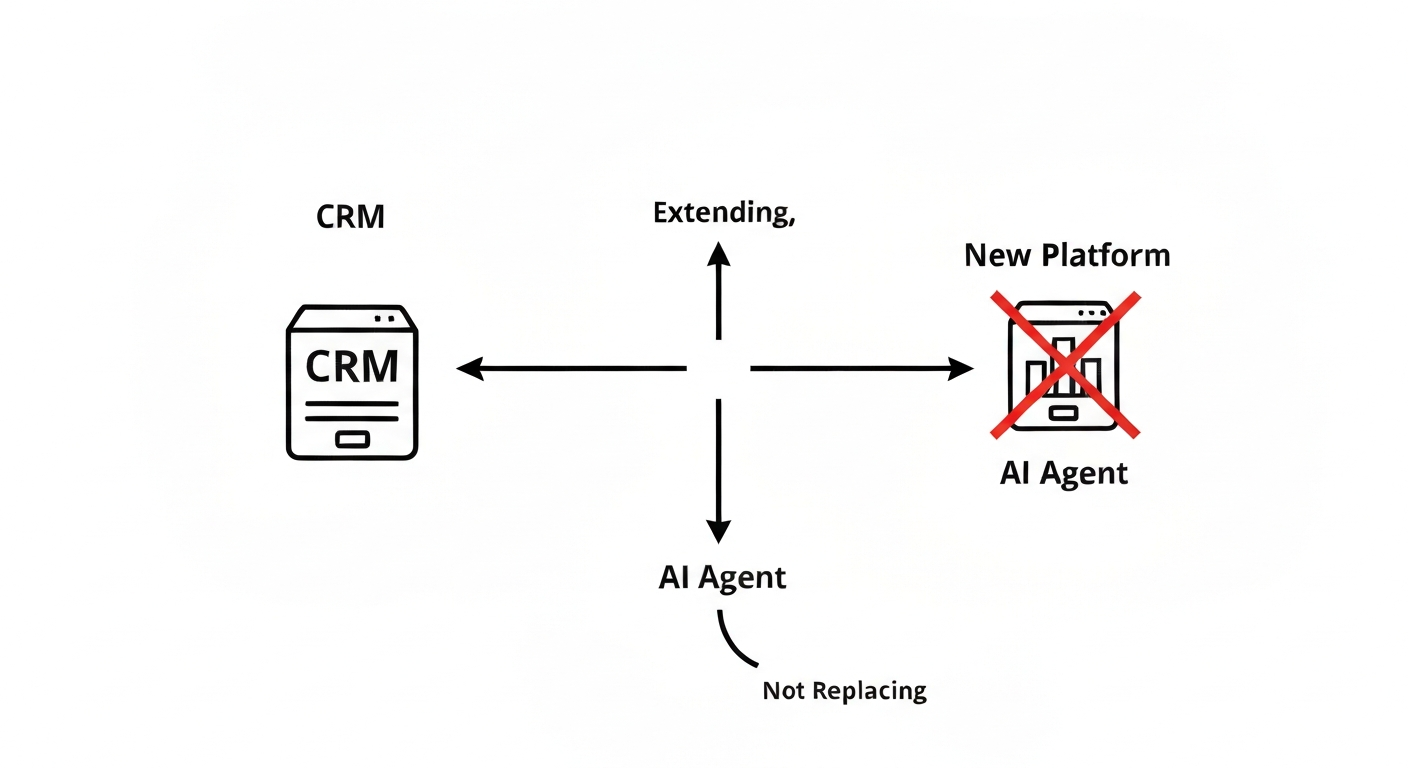
The businesses actually getting value from AI agents right now aren't replacing their tech stack. They're extending it. The CRM stays. The calendar stays. What changes is that AI starts operating inside those existing tools instead of requiring an entirely separate system running alongside them.
The Old Assumption: New Technology Means New Systems
For a long time, adopting new business technology genuinely did mean starting over. Moving to a new phone system meant new hardware. Moving to a new booking platform meant migrating years of client history. It's understandable that AI got lumped into that same category by default, another disruptive platform switch waiting to happen.
But AI agents don't work the way earlier generations of business software did. They're not a replacement system competing for the same job your CRM already does. They're closer to a new kind of user operating inside the systems you already have, one that happens to answer calls, respond to texts, and take actions, rather than a human logging in to do the same tasks manually.
This distinction matters because it changes the entire calculation. The question isn't "should we replace our CRM to use AI." It's "how does AI operate inside the CRM we already have."
What Actually Happens When AI Sits Inside Your CRM
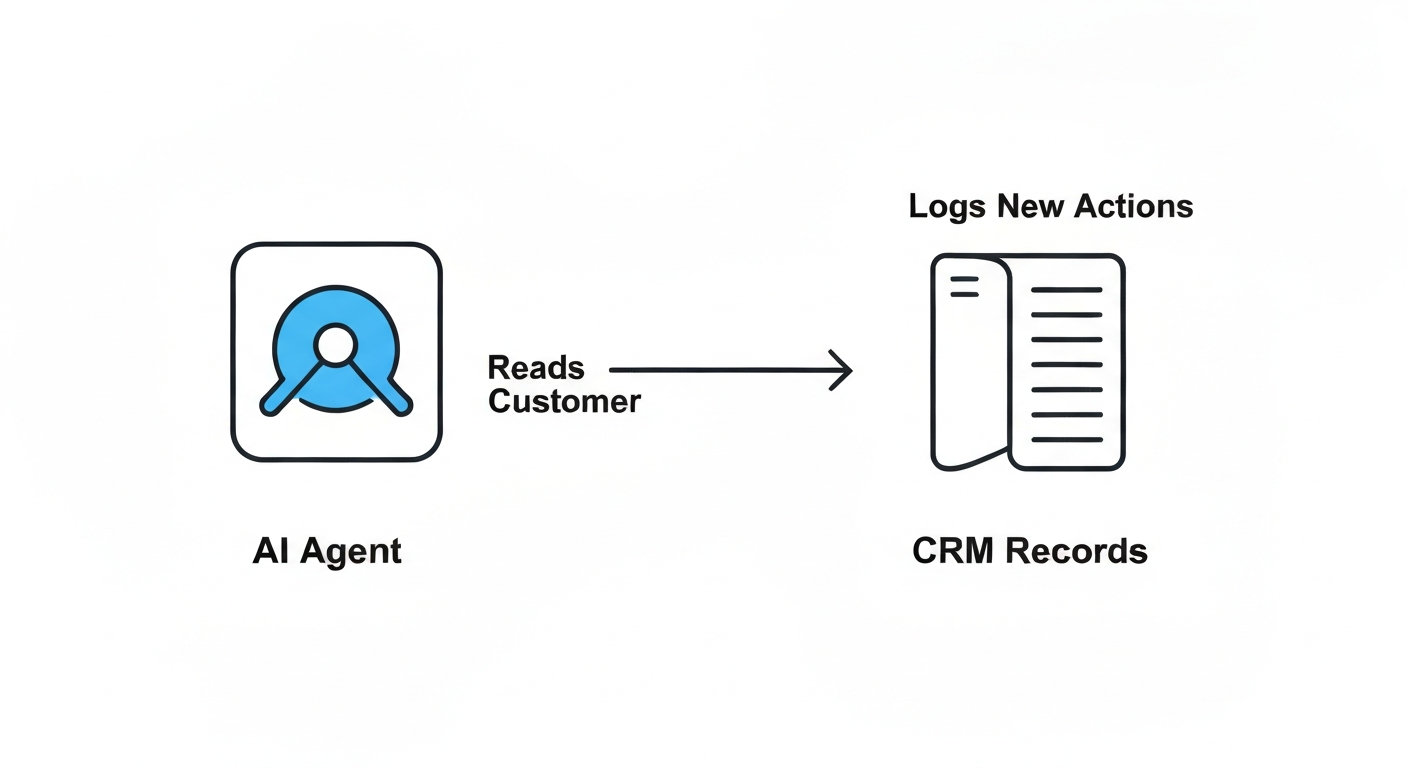
A CRM, at its core, is a record of customers, their history, and what's supposed to happen next. An AI agent connected to that CRM doesn't need a separate database of its own, it reads from and writes to the same records your team already relies on.
Here's what that looks like in practice:
- When a customer calls, the AI can pull up their history directly from the CRM, previous appointments, past purchases, notes from earlier conversations, rather than treating every caller like a stranger
- When the AI books an appointment or answers a question, that action gets logged in the same CRM your team already checks every day, not a separate dashboard nobody remembers to look at
- When a workflow automation triggers a follow-up sequence, it's pulling from and updating the same customer record the rest of your business already relies on
The result is that your team doesn't have to learn a new system or check a second dashboard to see what the AI has been doing. It shows up exactly where your existing records already live.
Curious how AI would fit into the CRM you're already using?
See exactly how this looks inside your current setup.
Why This Approach Beats a Disconnected AI Add-On
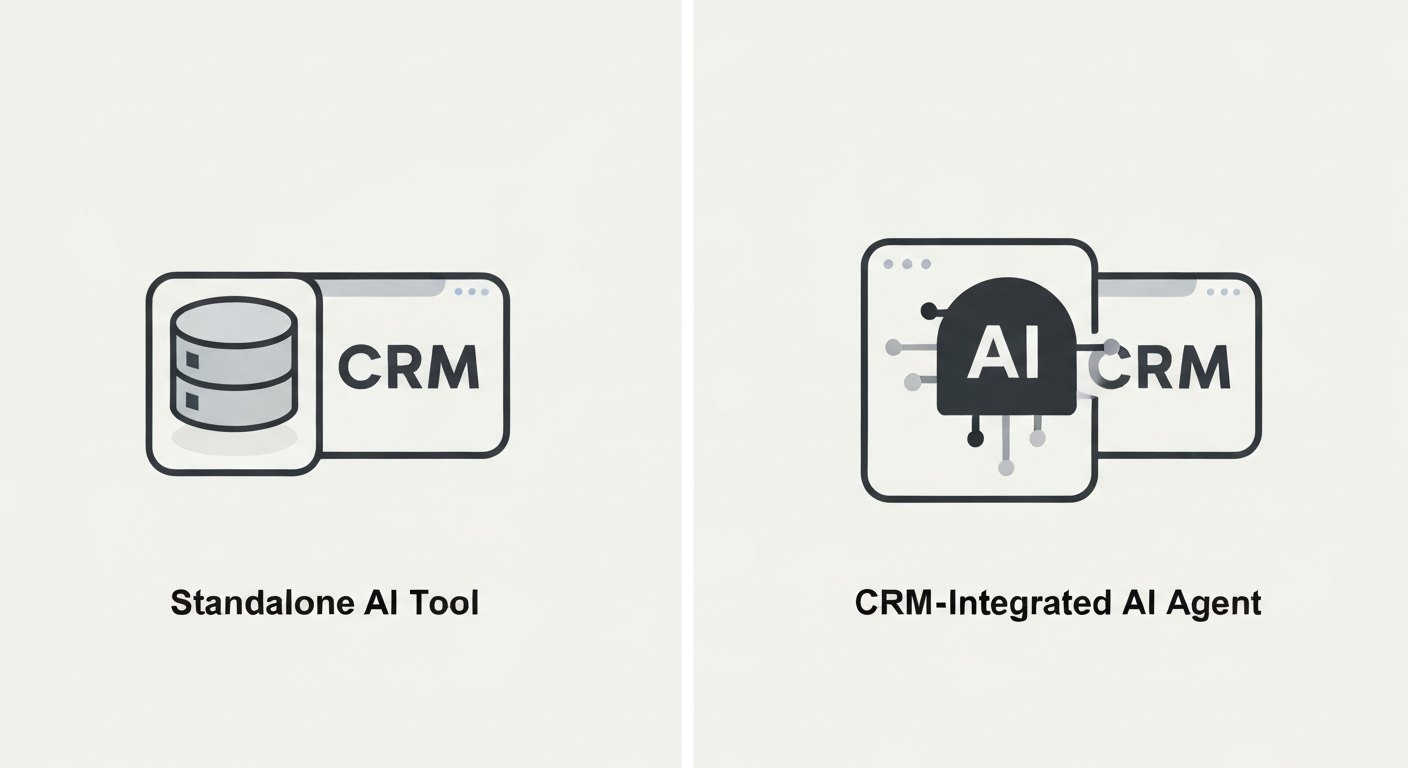
Some AI tools on the market are built as standalone products, sold separately from any CRM, expecting your business to check yet another dashboard to see what happened. This creates the exact fragmentation problem that shows up whenever tools don't talk to each other: information that lives in one place but not another, and a team that has to manually reconcile the two.
A CRM-integrated approach avoids this by design. There's no second system to check, because the AI's actions are already part of the same records your team is already using to run the business day to day. This matters more the longer a business runs on it, since fragmented systems tend to compound their inconsistencies over time, while an integrated approach stays coherent by default.
Comparing the Two Approaches Directly
| Factor | Standalone AI Tool | CRM-Integrated AI Agent |
|---|---|---|
| Where Customer History Lives | Separate database, often incomplete | Same CRM your team already uses |
| Extra Dashboard to Check | Yes, an additional system | No, actions appear in existing CRM |
| Consistency Over Time | Tends to fragment as data diverges | Stays coherent since there's one source of truth |
| Staff Learning Curve | New tool, new login, new process | Minimal, records appear where staff already look |
| Migration Required | Sometimes, depending on the tool | Rarely, connects to your existing setup |
Why GoHighLevel Specifically Solves This Well
This integrated approach is exactly why everything BayksCloud builds runs inside GoHighLevel rather than a separate proprietary AI platform. GoHighLevel already functions as CRM, calendar, and automation engine in one place for a huge number of small businesses, which means AI agents built inside it inherit all of that existing infrastructure instead of requiring a parallel system.
A Voice AI Receptionist, a Conversation AI chat agent, and connected Workflow Automation all operate on the same underlying customer records, rather than each one maintaining its own separate, disconnected version of the truth.
Bringing AI Into a Tech Stack You Already Trust
None of this requires a disruptive migration or a leap of faith into unfamiliar software. Every AI agent BayksCloud builds is designed to work with the CRM and calendar you already have in place, extending what's already there rather than replacing it.
The typical process looks like this:
- A discovery call reviewing your current CRM setup and what's already working well
- Building AI agents that read from and write to your existing records, rather than a separate system
- A review period confirming the integration behaves the way your team expects
- Launch within 72 hours once all requirements are gathered
If you want to see exactly how this would look inside your current setup, you can start a 14-Day Free Trial before making a longer-term decision.
Biggest Takeaways
- AI agents don't require replacing your existing CRM, they're designed to operate inside the systems you already trust
- A CRM-integrated approach means AI actions show up where your team already looks, rather than in a separate dashboard
- Standalone AI tools risk the same fragmentation problem that comes from any disconnected system, information diverging over time
- GoHighLevel already functions as CRM, calendar, and automation engine together, which is why AI agents built inside it inherit existing infrastructure instead of duplicating it
- The future of business technology looks less like new platforms and more like existing systems finally working together
See how AI fits into your existing tech stack, not around it.
Book Your Free AI Strategy Call Today →Key Takeaways
- AI automation directly impacts your bottom line by capturing leads and booking appointments that would otherwise go to competitors.
- Implementing AI doesn't replace your staff; it frees them from repetitive tasks so they can focus on high-value customer interactions.
- Speed to lead is critical in local services. AI ensures a 24/7 instant response across voice, web chat, and SMS.

Written by Eric Adjei
Eric Adjei is an AI & Digital Marketing Strategist and Business Coach with over 20 years in the IT and digital marketing space, and founder of BayksCloud Consultants LLC - a digital marketing agency in the Miami–Fort Lauderdale metro area, South Florida. He specializes in helping Managed IT Services (MSPs), Medical Spas (Medspas), and HVAC companies replace manual operations and missed leads with AI employees, intelligent CRM systems, and digital marketing strategies that work around the clock.
Book a Free AI Strategy Call →Voice AI
Every missed call is a customer you might never get back.
Most people don't leave voicemails. They hang up and call someone else.
- Answers inbound calls for you, even after hours
- Qualifies leads, handles FAQs and books appointments automatically
- Sounds natural and captures every opportunity in your CRM
Related Articles
Why Small Businesses Fail to Follow Up (And Why It's Never About Effort)
Poor follow-up isn't a discipline problem. Here's the real structural reason leads and customers slip through the cracks, and how to fix it.
Missed Call Lost Revenue: The Silent Leak Draining Your Business Every Month
Every missed call is a customer calling a competitor. See the real cost of missed call lost revenue and how AI recovers it automatically, 24/7.
AI Receptionist for Small Business: The Employee Who Never Misses a Call
Discover how an AI receptionist for small business answers every call 24/7, books appointments, and saves you thousands vs. hiring staff. Book a free demo today.
Ready to implement AI in your business?
Book a free strategy call to see how an AI receptionist can stop your revenue leaks.
Book Free AI Strategy Call