
Why Most Web Chat Widgets Fail (And How AI Fixes Them)
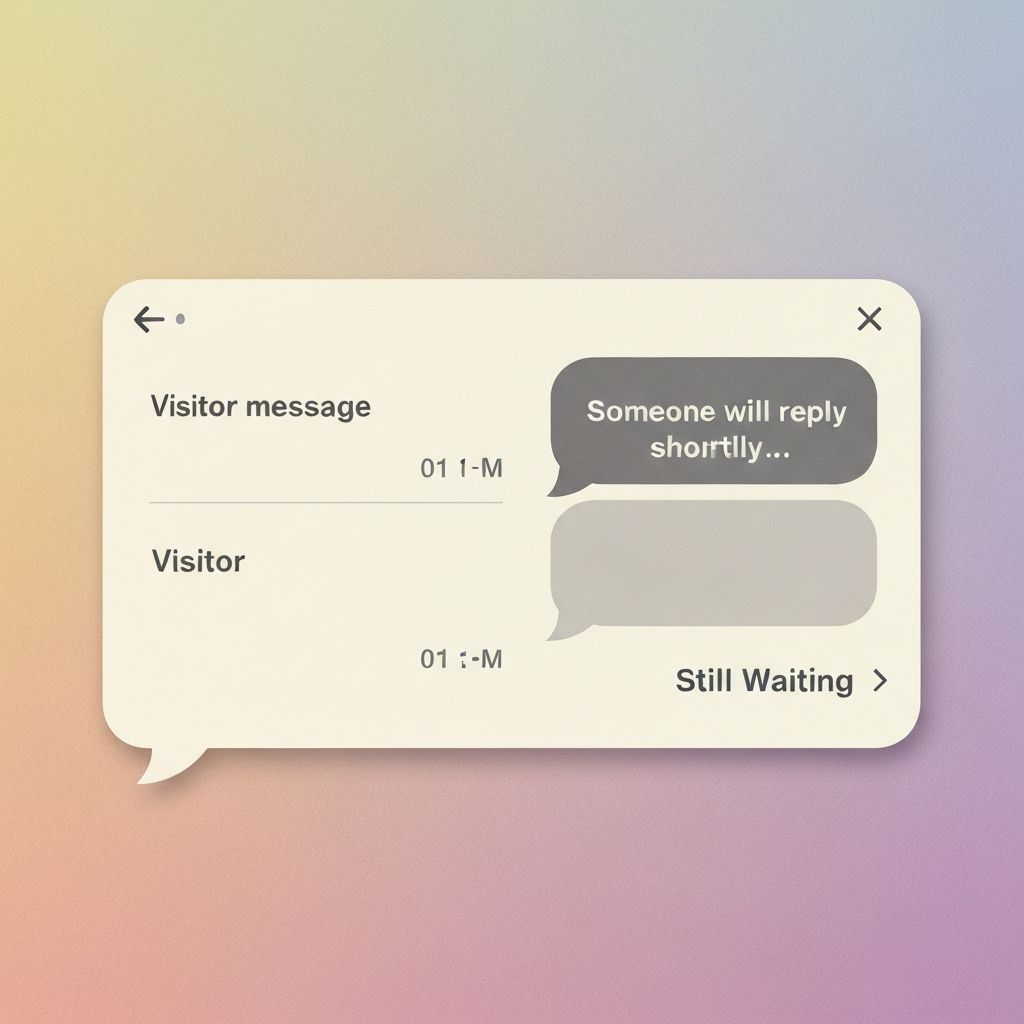
Almost every business website has a chat bubble sitting in the bottom right corner. Almost none of them actually work the way a visitor expects. Click it, type a question, and the response is usually some version of "Thanks for reaching out, someone will get back to you shortly," which is just a voicemail wearing a friendlier costume.
This is the quiet failure hiding inside a tool most businesses assume is already helping them. A chat widget that doesn't actually answer anything isn't generating leads, it's giving visitors one more polite way to leave without getting what they came for.
What a Chat Widget Was Supposed to Solve, and Why It Usually Doesn't
The entire premise of adding live chat to a website is speed. A visitor has a question right now, in the moment they're actively considering your business, and chat is supposed to close that gap faster than an email or a phone call would. That's a good premise. The execution is where most businesses quietly fail.
Most chat widgets fall into one of two categories. Either they're a "live chat" tool that's actually unstaffed most of the day, so visitors type a message into what looks like a real-time conversation and simply never hear back promptly, or they're a rule-based bot so rigid that any question outside a narrow, pre-scripted path returns a useless non-answer. Both versions create the same result: a visitor who expected a fast answer, got neither speed nor substance, and left.
The Specific Ways Chat Widgets Quietly Break Trust
A chat widget failing doesn't usually look dramatic. It looks like small, forgettable moments that add up to a visitor closing the tab.
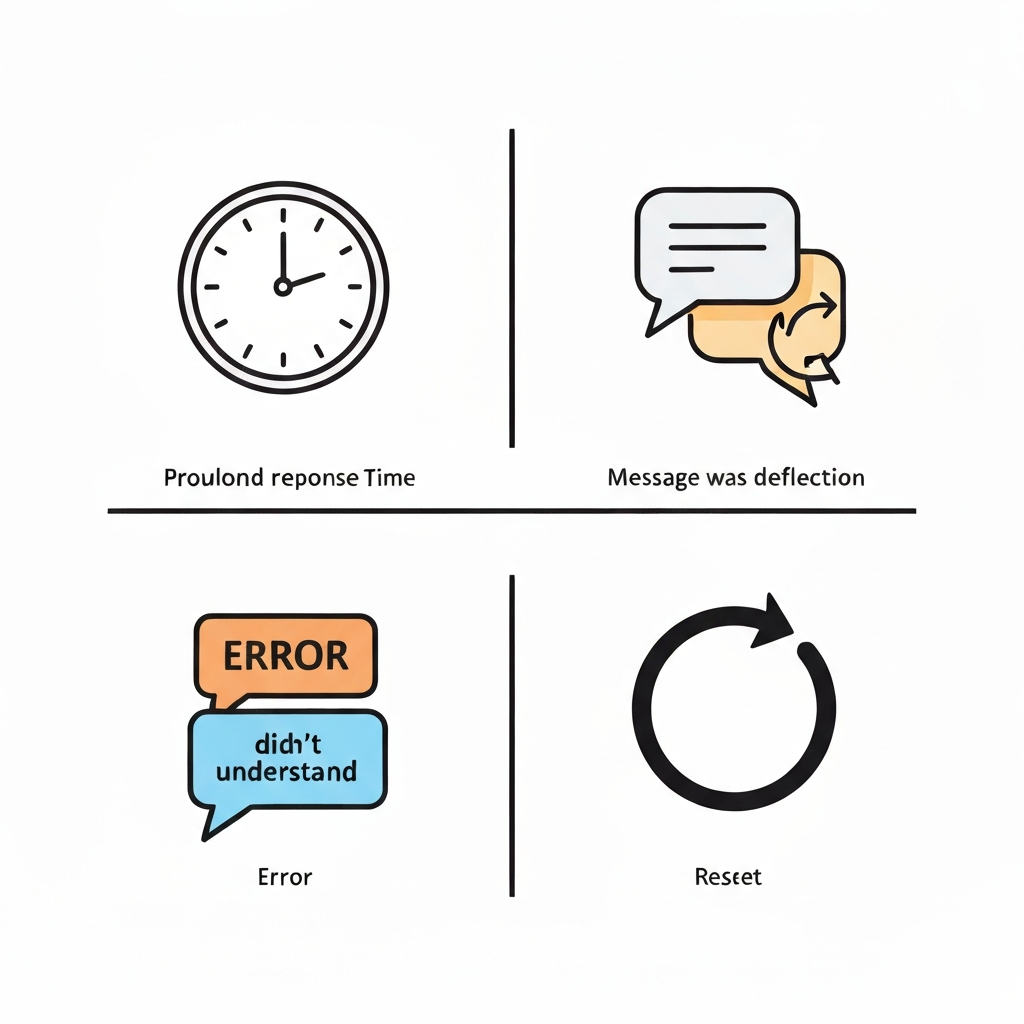
- The widget displays "we typically reply in a few minutes" and then takes hours, or never replies at all
- A visitor asks a specific pricing or availability question and gets a generic "great question, let me connect you with someone" response that never actually connects them to anyone
- The bot can only follow a rigid decision tree, and any question phrased slightly differently than expected returns "I'm sorry, I didn't understand that"
- There's no continuity if the visitor leaves and comes back, forcing them to start the entire conversation over from nothing
None of these failures are really about the concept of chat being a bad idea. They're about a widget that promises real-time help and then can't actually deliver on that specific promise in the moment it matters most.
See what happens when your chat widget actually answers instantly.
Book a Free AI Strategy Call →Why Rule-Based Bots Were Never Going to Solve This
Before modern language models, "chatbot" almost always meant a decision tree wearing a chat interface. Click a button, get a pre-written response, click another button, get another pre-written response. This worked fine for extremely narrow use cases and fell apart the moment a visitor asked anything slightly outside the script.
The fundamental issue was that these bots weren't actually understanding anything. They were matching a visitor's click or a narrow set of expected keywords to a pre-built response, which meant the moment a real, natural question came in, phrased the way an actual person talks rather than the way a form expects, the bot simply had nothing useful to offer.
What Changes When Conversation AI Replaces a Rule-Based Widget
A Conversation AI chat agent built on modern language models doesn't require a visitor to phrase things a specific way or click through a rigid menu. It understands the actual question being asked and responds with real, specific information trained on your business, not a generic scripted reply.
Here's what that shift actually looks like in practice:
- A visitor asks a specific, oddly-phrased question, and the AI understands the intent behind it rather than requiring exact keyword matches
- Pricing, availability, and service questions get real answers trained on your actual business, not a deflection toward "someone will follow up"
- The AI can check calendar availability and book an appointment directly inside the chat, rather than just collecting an email address and ending the interaction there
- If the visitor leaves and returns later, the conversation history is retained, so they're not forced to restate everything from the beginning
Turn your chat widget into something that actually converts visitors.
Start Your 14-Day Free Trial →Comparing a Typical Widget Against a Properly Built AI Chat Agent
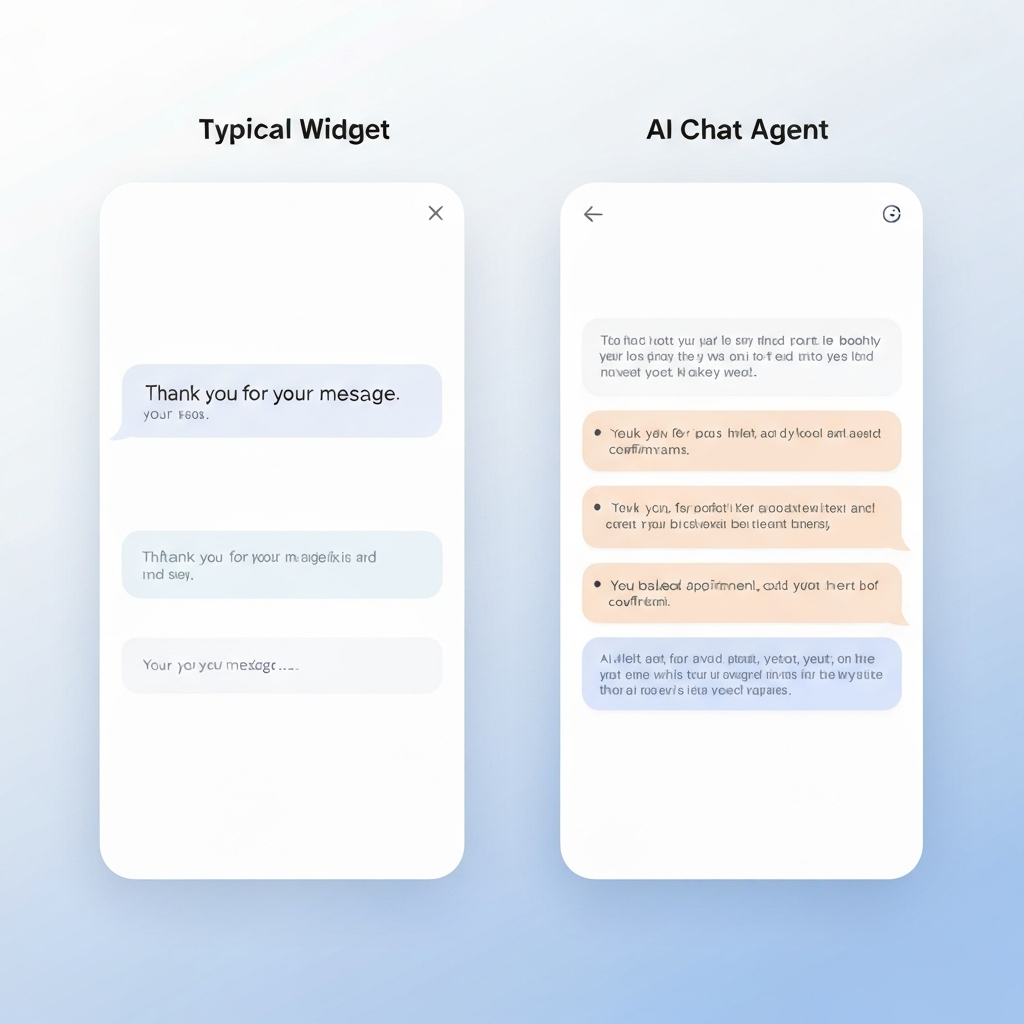
| Moment in the Interaction | Typical Rule-Based or Unstaffed Widget | AI-Powered Chat Agent |
|---|---|---|
| Visitor Asks a Specific Question | Generic response or "I didn't understand" | Understood and answered directly |
| Visitor Wants to Book | Collects email, no direct action taken | Checks calendar, books appointment live |
| Visitor Returns Later | Conversation resets, no memory | Full history retained, continues naturally |
| Response Time | Minutes to hours, if staffed at all | Immediate, every time |
Why This Gap Costs More Than It Seems
A failed chat interaction rarely produces a complaint. The visitor simply closes the tab and either moves on to a competitor's site or forgets about the business entirely. Because there's no formal rejection attached to it, this specific type of lost opportunity almost never gets tracked or noticed internally, even though it's happening every single day a chat widget sits there quietly underperforming.
This connects directly to the same Workflow Automation principle that matters across every channel: a chat interaction that ends in a booked appointment or a logged lead in the CRM is worth infinitely more than one that ends in silence, regardless of how polished the widget looks sitting in the corner of the screen.
Building a Chat Widget That Actually Does What It Looks Like It Does
Fixing this doesn't mean removing your chat widget, it means replacing what's powering it. Every Conversation AI chat agent BayksCloud builds runs natively inside GoHighLevel, trained specifically on your services, pricing, and FAQs rather than relying on a generic decision tree.
The typical process looks like this:
- A discovery call reviewing your current chat widget and the kinds of questions visitors actually ask
- Training the AI on your specific business so it can answer real questions instead of deflecting them
- A review period testing realistic, oddly-phrased visitor questions before anything goes live
- Launch within 72 hours once all requirements are gathered

If you want to test how your current chat widget compares to a properly trained AI agent, you can start a 14-Day Free Trial and see the difference on your own website.
Biggest Takeaways
- ✓Most chat widgets fail quietly, either through slow staffed responses or rigid, rule-based scripts that can't handle real questions
- ✓A failed chat interaction rarely produces a visible complaint, the visitor simply leaves without anyone noticing the missed opportunity
- ✓Modern Conversation AI understands the intent behind a question rather than requiring exact keyword matches from a decision tree
- ✓A properly built chat agent can book appointments directly inside the conversation, not just collect an email for later follow-up
- ✓Conversation continuity matters, a visitor returning later shouldn't have to restate everything from scratch
Stop letting your chat widget quietly lose leads. Fix it this week.
Book Your Free AI Strategy Call Today →Key Takeaways
- AI automation directly impacts your bottom line by capturing leads and booking appointments that would otherwise go to competitors.
- Implementing AI doesn't replace your staff; it frees them from repetitive tasks so they can focus on high-value customer interactions.
- Speed to lead is critical in local services. AI ensures a 24/7 instant response across voice, web chat, and SMS.

Written by Eric Adjei
Eric Adjei is an AI & Digital Marketing Strategist and Business Coach with over 20 years in the IT and digital marketing space, and founder of BayksCloud Consultants LLC - a digital marketing agency in the Miami–Fort Lauderdale metro area, South Florida. He specializes in helping Managed IT Services (MSPs), Medical Spas (Medspas), and HVAC companies replace manual operations and missed leads with AI employees, intelligent CRM systems, and digital marketing strategies that work around the clock.
Book a Free AI Strategy Call →Voice AI
Every missed call is a customer you might never get back.
Most people don't leave voicemails. They hang up and call someone else.
- Answers inbound calls for you, even after hours
- Qualifies leads, handles FAQs and books appointments automatically
- Sounds natural and captures every opportunity in your CRM
Related Articles
Why Small Businesses Fail to Follow Up (And Why It's Never About Effort)
Poor follow-up isn't a discipline problem. Here's the real structural reason leads and customers slip through the cracks, and how to fix it.
Missed Call Lost Revenue: The Silent Leak Draining Your Business Every Month
Every missed call is a customer calling a competitor. See the real cost of missed call lost revenue and how AI recovers it automatically, 24/7.
AI Receptionist for Small Business: The Employee Who Never Misses a Call
Discover how an AI receptionist for small business answers every call 24/7, books appointments, and saves you thousands vs. hiring staff. Book a free demo today.
Ready to implement AI in your business?
Book a free strategy call to see how an AI receptionist can stop your revenue leaks.
Book Free AI Strategy Call